Digging the archeological museum of Istanbul

Egyptian obelisk, Istanbul

Egyptian obelisk, Istanbul

I’ve never been so excited to see old stuff as I was on Saturday morning when we bought tickets to visit the Istanbul Archeological Museum.  Located next door to the Topkapi Palace (and a stone’s throw from Hagia Sophia) the museum is housed in 3 buildings and has a great presentation of artifacts found both within the city and from around surrounding countries.  Information placards were written in both Turkish and English making the need for an audioguide not necessary. But, being deprived of the audioguide for our tour of the Topkapi Palace and Hagia Sophia I begged Tim to let me spend the 5 lira to get one. I just love the hunt for the 3 digit number describing the highlights of the museum.  Among the best on show: the Alexander Sarcophagus (pictured above)  so named not for the body inside but for the depiction of Alexander the Great’s battle scenes on the outside. This item is the museum’s prized possession and dates from the 4th Century BC. Among other great finds: the Kadesh Treaty, the first peace treaty ever recorded made between the Hittites and the Egyptians; and the Code of Hammurabi dating to 1750 BC. To check out what we saw at the museum, click on the box above.

Hagia Sophia

Hagia Sophia, Istanbul

Hagia Sophia, Istanbul

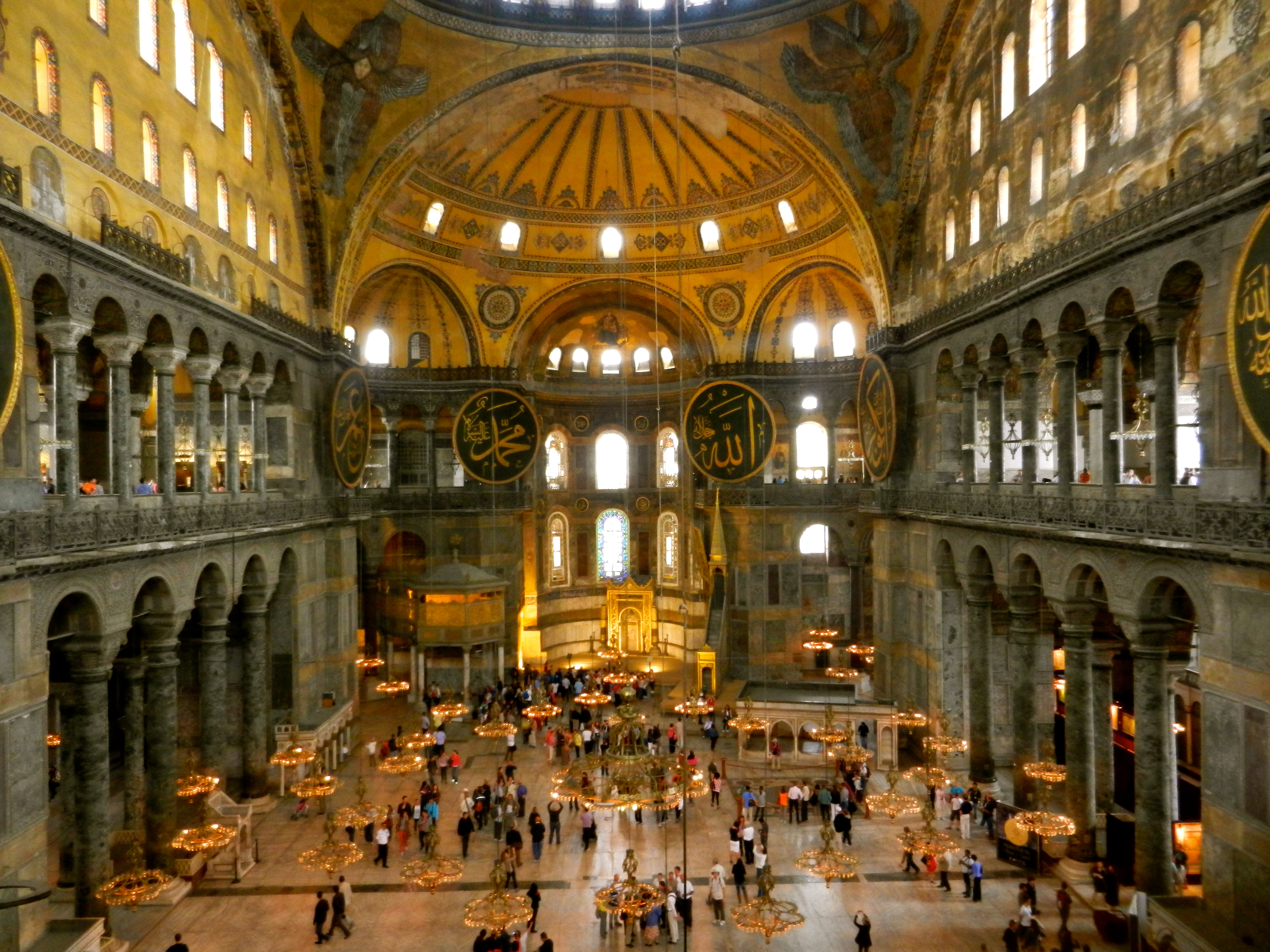
Following our visit to Topkapi Palace, we left the grounds through the Imperial Gate and walked directly into Hagia Sophia.  We had no idea it was so close to the palace.  But, it makes sense.  Upon conquering the city, the Ottomans declared Hagia Sophia to be a mosque and the viziers prayed in this space each morning prior to making their way to the palace to hear requests and decree laws.  The Hagia Sophia is now a museum and visitors queue up early in the morning and resist the plethora of carpet salesmen trying to get a sale by asking, ‘where you from?”  and “Oh, nice city. I have a cousin who lives there.” Tim and I both found it annoying and did our best to first engage them in a polite conversation (this is not advised as they don’t leave you alone) and second, ignore them with an icy stare ahead.  Once you pay your entry fee, you are free to roam throughout the museum and spend as much time as you wish taking pictures and looking at the art that remains.

Minbar

Minbar

Two features in mosques which caught our eye: the minbar, which is the pulpit in a mosque and the place where the imam delivers his message and the mihrab which is the niche that points to Mecca.  Both of these features in Hagia Sophia are intact and stunning in construction.  When the church was captured by the Ottomans, all of the mosaics were plastered over and the space was reimagined as a mosque.  We made our way to the second level and got up close to the mosaics which have been gently restored but still show evidence of damage from the plaster. In comparison, the Byzantine mosaics in Ravenna Italy still glimmer and delight where these mosaics were muted and seemed a bit sad to me.  The interior space is huge and the architecture is boggling; the large central dome appears suspended in space with no columns or supporting structures below.

After our visit to Hagia Sophia, we went over to the Basilica Cistern, which is just across the street.  We waited about 30 minutes to pay our entry fee and then descended into the cool and very wet space underground.  The basilica was constructed by Emperor Justinian in 6th Century AD and provided a water filtration system for the Palace of Constantinople as well as Topkapi Palace and into modern times. The cistern reminded us of the Pirates of Caribbean ride at Disneyland. Dark, with hundreds of roman columns illuminated by the glow of lamps in the water. And, for those who want to spend a lot of time underground, a small cafe with tables near the water. While May temperatures are pleasant, I can imagine that being in the cistern in July when temps are near 105 F eating underground is a great idea.  In the northwest corner are two Medusa heads used as column supports.  No one knows why the heads are here but they are pretty cool to look at.

West meets East

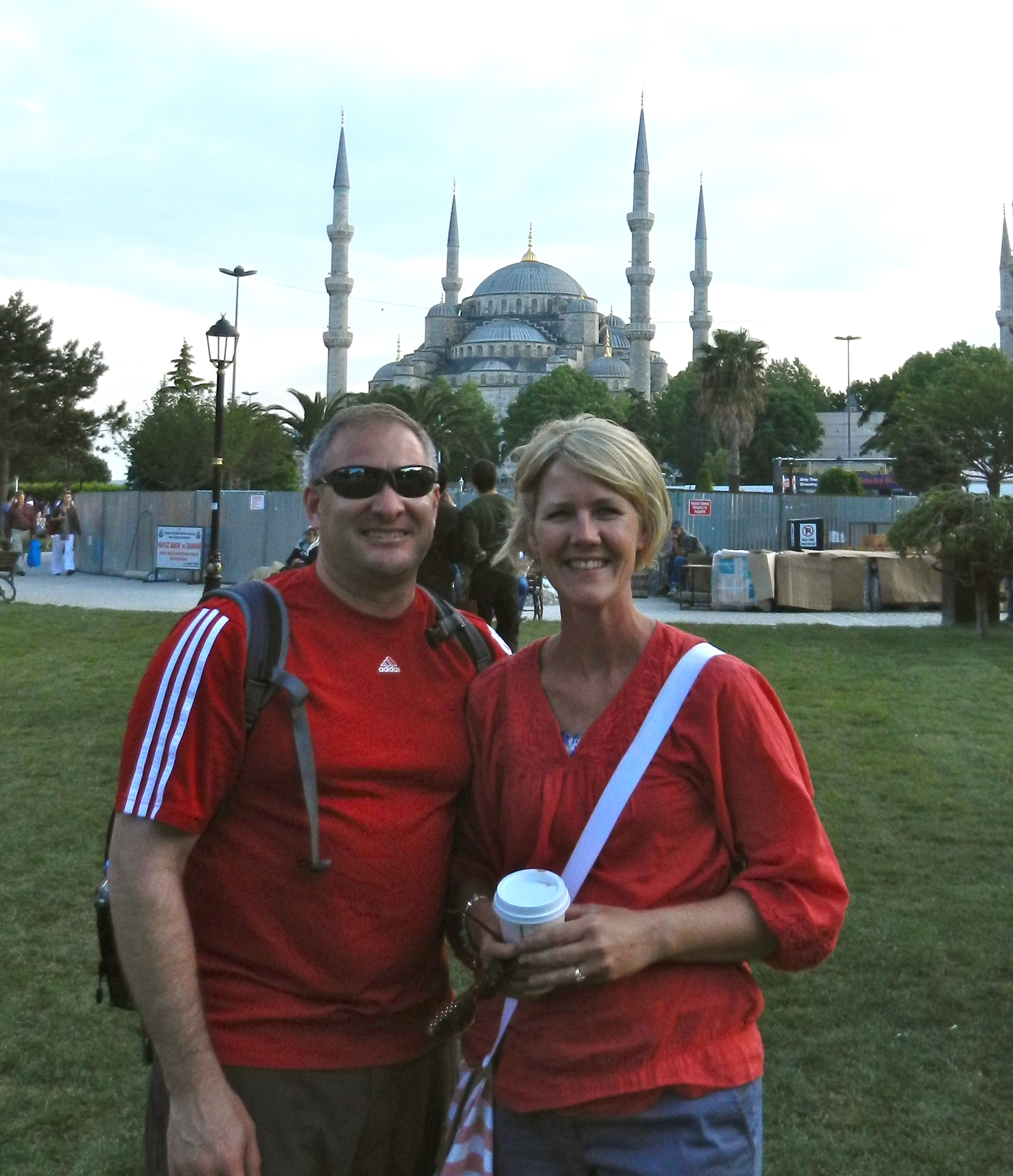
Hanging out in front of the Blue Mosque, Istanbul

Hanging out in front of the Blue Mosque, Istanbul

Our trip to Istanbul began with a crazy thought: since we’re in Europe, why don’t we go to someplace we’d never think of visiting because it would be just too far away. Only two places came to mind: Africa and Istanbul.  This spring, we chose Istanbul.  We utilized the services of our local German travel agent at the train station.  Not only does she speak excellent English, she also lived in Istanbul for a year and recommended we stay in the new city where the nightlife was.  And, Tim and I thrive on nightlife!

On Thursday afternoon, we boarded our flight from Munich to Istanbul at 2:30pm. It was a quick 2 hour flight to the city. Upon arrival, we paid 20 euro each for a Visa and we were on our way.  The hotel we booked sent a limo driver and car to pick us up.  This is the best way to go when arriving at a large and busy city.  I’m not certain we would have found our way to the hotel if we had relied on public transportation.  Traffic appeared to zip along and after crossing under the Valens Aquaduct (4th C AD and the major water supplier to the Roman city) we were at our hotel in 30 minutes.  We dumped our bags in the room and made our way outside to explore the town.  We found ourselves walking on Independence Avenue, the busiest commercial shopping street in Istanbul. It’s a pedestrian walkway filled with thousands of people darting in and out of shops and restaurants.  Tons of street food is available including roasted chestnuts, corn on the cob and ice cream.

On Friday morning, we headed across Galata Bridge which spans the Bosphorus in front of the New Mosque and made our way to the three top attractions: Topkapi Palace, Hagia Sophia and Basilica Cistern. (we left Blue Mosque for another day).  It is quite remarkable to see the number of mosques that dot the cityscape.  For some reason, I thought there would be one or two major ones but in fact, there are numerous mosques each for a different neighborhood. The city is busy and everyone appears to be in movement. And, it is quite cosmopolitan. People from all different nations and religions make the city their home. There were fishermen on the bridge already at 8:30am and by the time we made it to the palace, 15 minutes before it opened, the ticket line had already snaked through the ropes.  But, it was a beautiful morning and the promise of seeing life as a sultan up close was tantalizing.

Entry tickets to the palace cost 20 lira, and if you want to see the Harem a separate 15 lira ticket is required.  The palace was built soon after the Ottomans conquered Constantinople in 1453.  We strolled through the palace grounds, oohed at the jewels and weapons on display and then made our visit to the Harem.  I was struck by the simplicity of the palace; walls are lined with iznik tiles and windows feature lots of colored glass which allows for tons of light to flood the space.  Although women in the Harem lived well in comparison to their friends left in the city, I don’t think it was an easy life being kept captive in the Harem.  From the Harem rooms, glimpses of the city across the bridge could be seen and I imagine girls would take a peak and imagine what it would be like to visit Galata Tower, built by the Genovese in the 1300s.

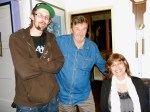
A little family time

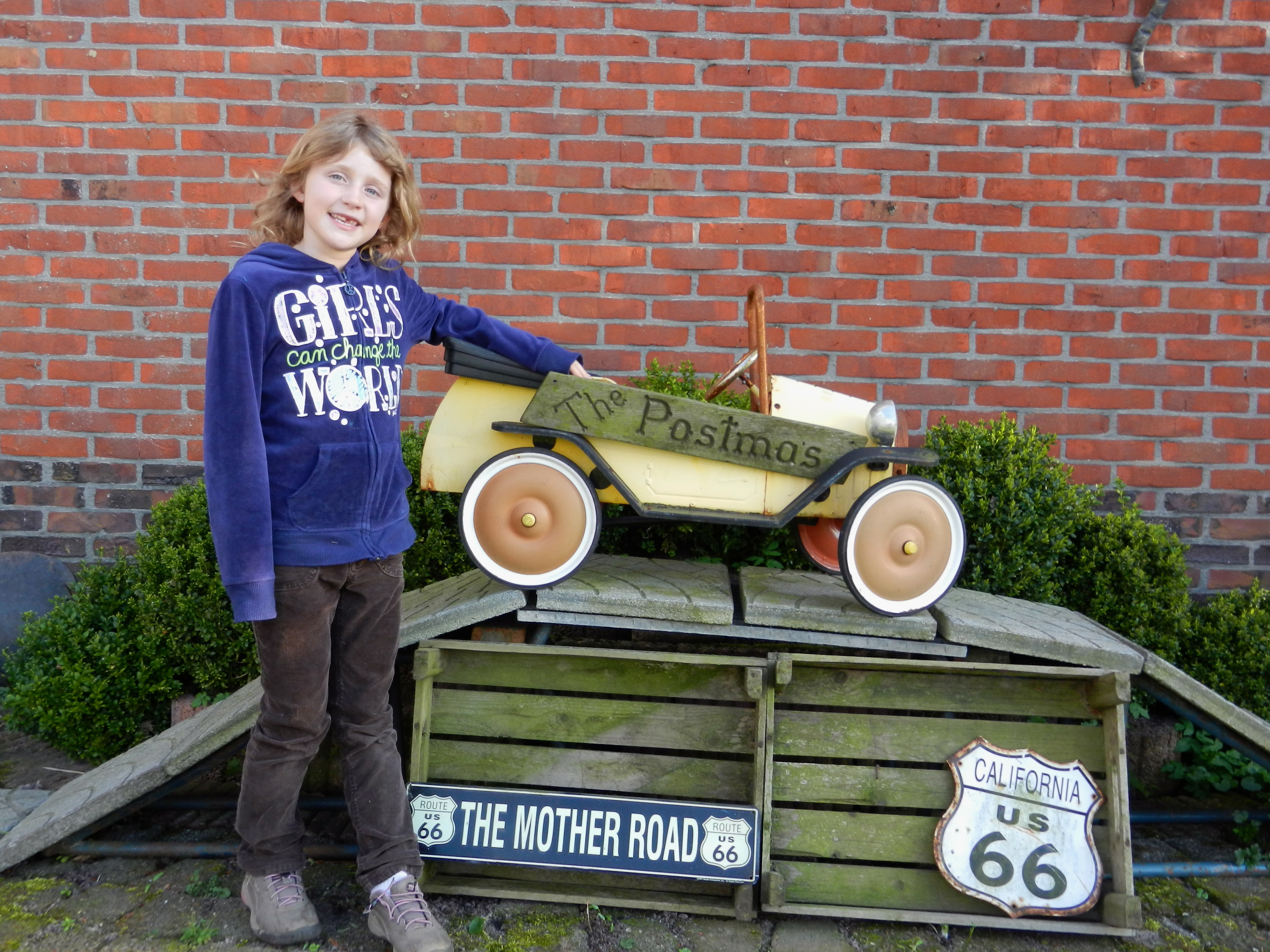
Postma Time

On our last day in Holland, we drove an hour east to visit an unusual monkey zoo. Recommended by a military friend, we were delighted with Apenheul, an oasis for primates about an hour’s drive from Amsterdam. Ticket prices might seem a bit pricey (19.50euro/adult), but I have to say it was well worth it. Upon entry, visitors receive a descriptive walking map of the grounds along with a monkey-proof bag–a backpack for backpacks so tricky monkey fingers can’t get ahold of your snacks. So it came as no surprise that at the first stop, where we encountered the clever spider monkeys, they were instantly on our arms, heads and laps as we watched them try diligently to get at our food. Most of the stops along the path included informational presentations from zoo keepers about diet needs, social behavior and other helpful information about the animals in the zoo. Other animals were chimpanzees, lemurs, gorillas…all easily viewed from the platforms with very few obstructions to enjoy watching them. We spent about 5 hours at the zoo and enjoyed a delicious lunch while being entertained by peacocks.

Our first little friend at Apenheul

Our first little friend at Apenheul

Lauren feeds a monkey

Lauren feeds a monkey


Big mama carries her baby

Big mama carries her baby


Close enough to give them a little love

Close enough to give them a little love


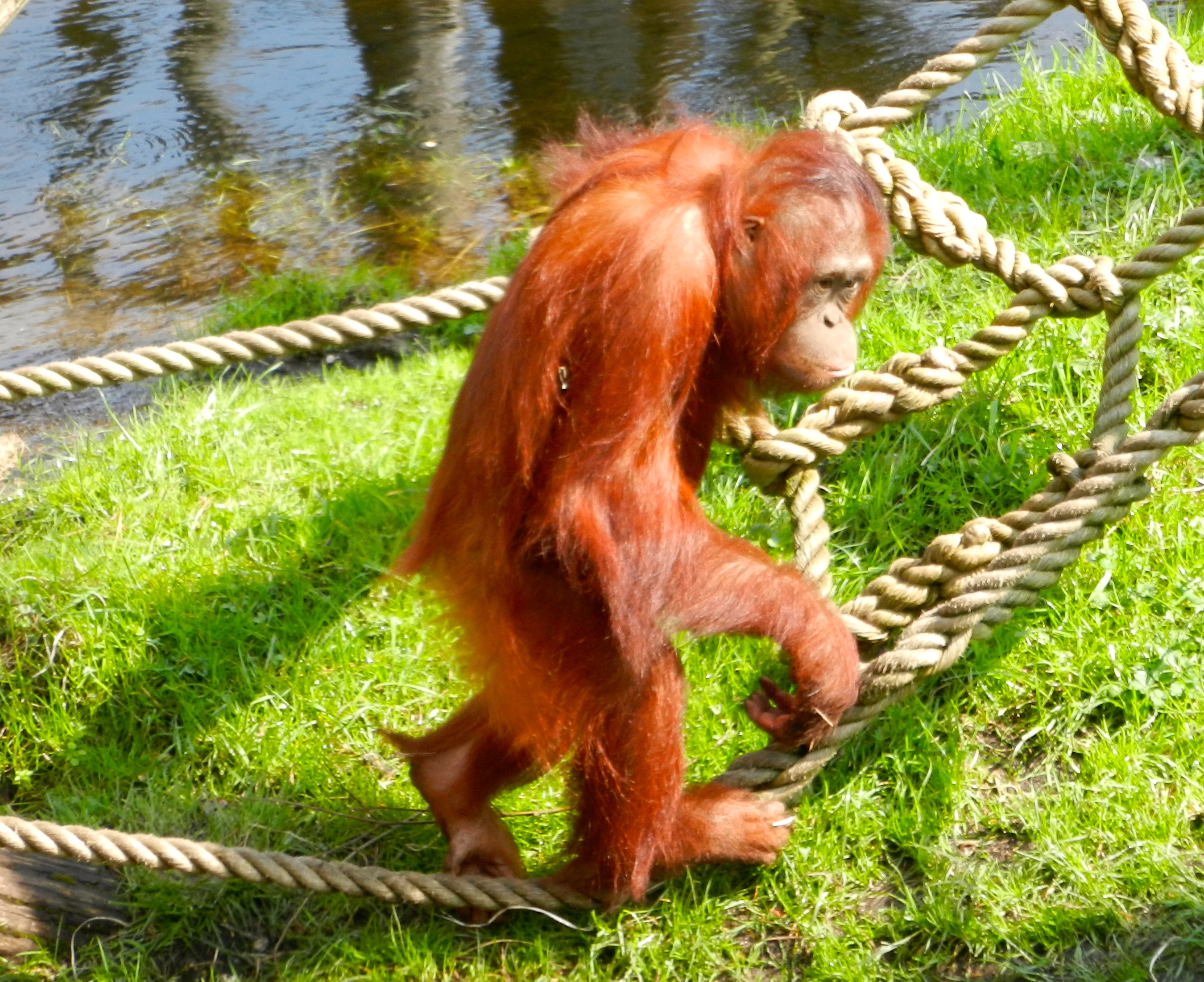
One of the most entertaining beasts around...the orangutan

One of the most entertaining beasts around…the orangutan


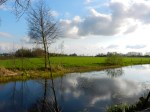
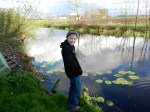
Following a visit to the zoo, we drove to Friesland, a province in Northern Holland where my dad was born.  His brother lives there and we had a great time touring the surrounding countryside and catching a glimpse of daily life in Holland.  We enjoyed a great Indonesian meal and conversation on the back porch. Lilly had a great time entertaining Brownie the dog and Lilly managed to go into the ditch in the backyard as she threw Brownie’s frisbee into the water and tried to retrieve it.  Lilly ended up happy that the accident happened because Akke had a pair of knit slippers from Great Grandma and Lilly quickly shed her  wet shoes and slipped those handmade booties over her feet.  Once it got dark, Uncle Ed set up a super strong telescope and we were able to look at Venus and Mars in the night sky.   It was a surreal experience…here we were…Americans living in Germany, visiting family in Holland, looking at distant planets in our solar system.  Imagine that!

Zaanse Schans Open Air Museum

windmills of Zaans Schans

windmills of Zaans Schans

Following our visit to the tulip gardens we took an afternoon stroll through an open air museum near Zaandam.  Zaans Schans is a working village that was established to preserve Dutch culture.  They transplanted several windmills from the countryside and brought them here. Visitors can also stop by the wooden shoe store (the cobbler was inside demonstrating how the shoes are made), the cheese shop (smoked Gouda-mmm) and the clock shop.  cheese and clogsMost little stores are open to tourists and are free but some charge a nominal fee–the windmills cost 3 euro/adult if you wanted to climb inside and see how it worked. We enjoyed walking the paths and taking pictures of the quaint homes and waterways.

Keukenhof Gardens

557633_3906507785727_1370259365_3733102_1510611212_n

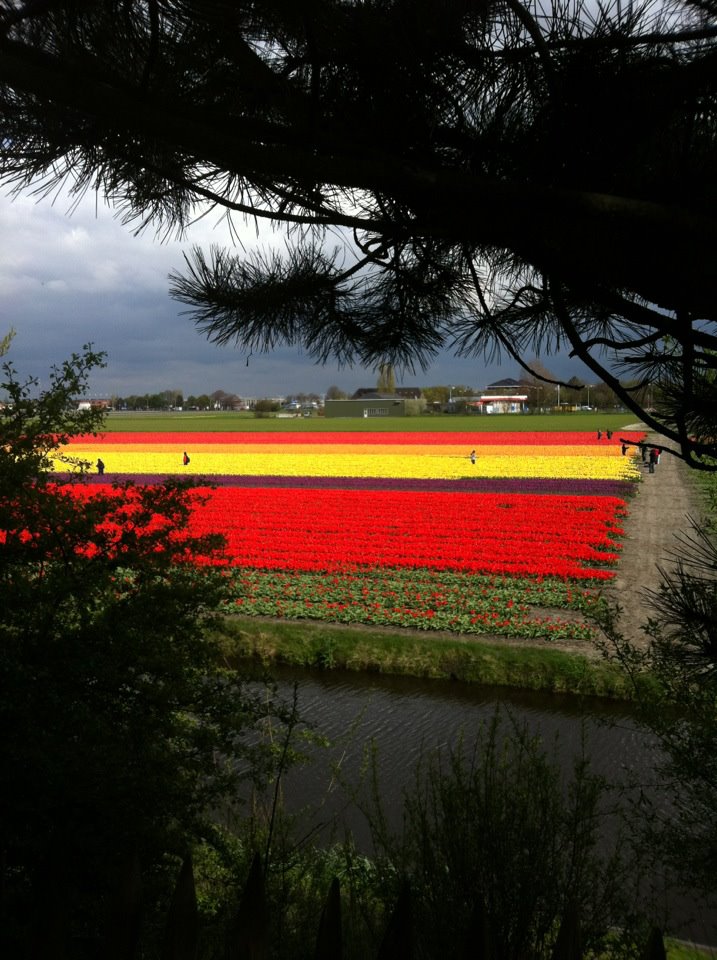
The weather couldn’t be better for a visit to the world-famous Keukenhof Gardens.  We got an early start to the day and drove west to the town of Lisse on the coast of Holland.  Row upon row of tulips are in bloom from late March to mid-May and the gardens is the place to see the spectacular combination of colors laid out in attractive flower beds.  We pulled into the parking area and right away saw friends from Hohenfels who had the same idea.  They come to Holland every Spring Break and they also commented on the fantastic weather this week.  We walked through the gardens at a leisurely pace and made sure to spend time at the children’s play area (with zip line) and the windmill which afforded great views of the fields that were still in bloom.  While we think the cut flower arrangements at Floriade were better, I can’t imagine a more delightful outdoor feast for the eyes than this place on a sunny spring day.